
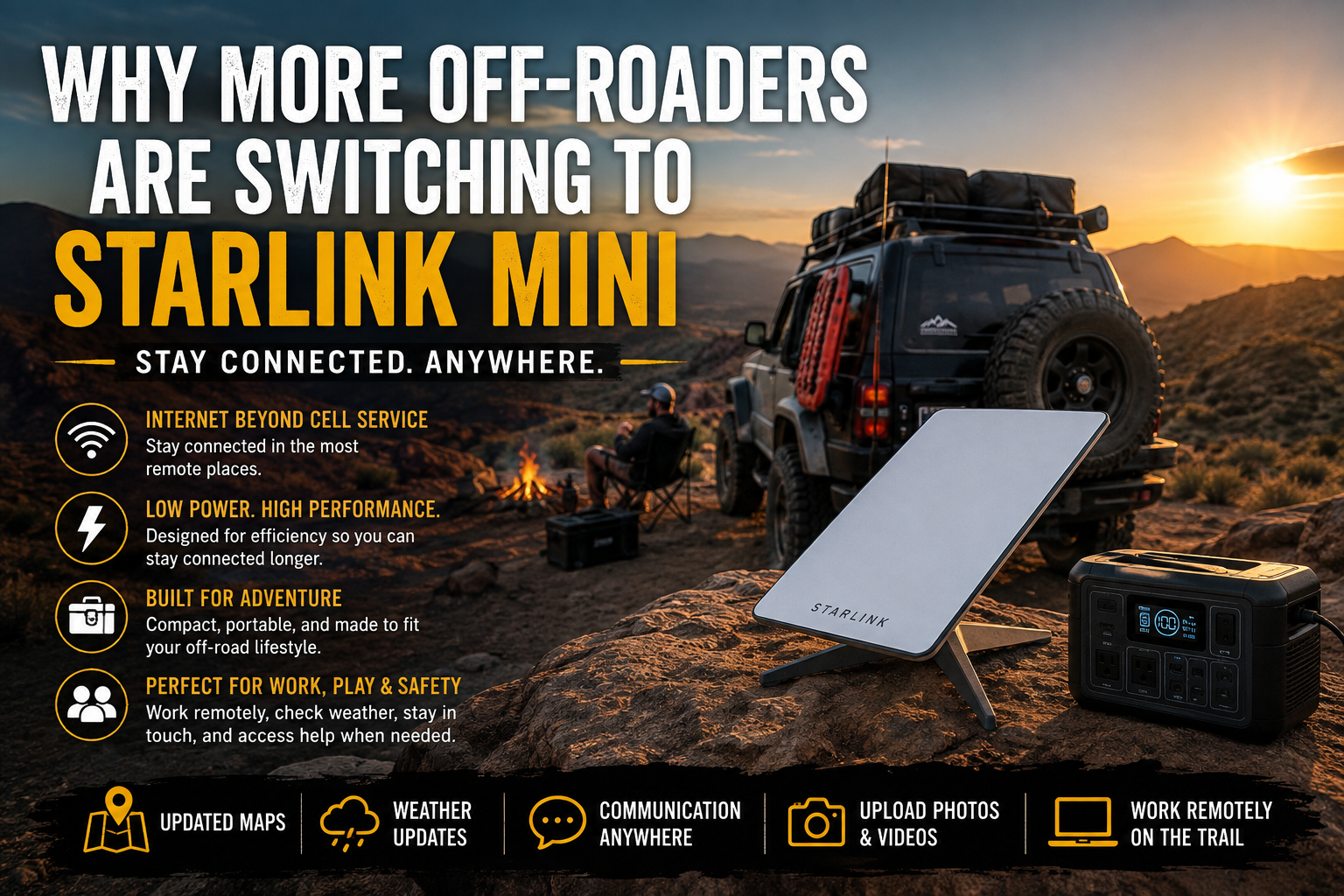
Why More Off-Roaders Are Switching to Starlink Mini for Remote Adventures
Reliable communication has always been one of the biggest challenges when exploring remote trails. Once you're outside cellular coverage, staying connected often meant carrying a satellite messenger or simply accepting that you'd be offline until returning to civilization.
That is rapidly changing.
Since the release of the Starlink Mini, more overlanders, off-road racers, campers, and remote workers have begun incorporating satellite internet into their vehicles, allowing them to stay connected from places that previously had little or no service.
A Smaller, More Practical Solution
Unlike the original Starlink systems designed primarily for stationary home use, the Starlink Mini was built with portability in mind.
The compact dish is small enough to fit inside many vehicle storage systems and draws significantly less power than previous Starlink models, making it much easier to integrate into an off-road build.
For many users, it has become another piece of essential recovery gear—right alongside recovery boards, air compressors, and communication radios.
Staying Connected Beyond Cell Service
For overland travelers, internet access isn't just about scrolling social media around the campfire.
Reliable satellite internet can be useful for:
- Downloading updated maps
- Checking changing weather conditions
- Communicating with family
- Uploading photos and videos from camp
- Working remotely while traveling
- Accessing emergency information when needed
As more people combine work with adventure, having dependable internet almost anywhere has become increasingly valuable.
Perfect for Race Teams
Desert racing teams are also finding new uses for Starlink Mini.
Race pits can maintain communication with sponsors, upload media throughout an event, monitor race tracking, and coordinate logistics without relying solely on overloaded cellular networks near popular race locations.
Content creators covering events have also embraced Starlink Mini, making it easier to upload photos and videos directly from remote pit locations instead of waiting until they return home.
Powering Starlink on the Trail
One of the biggest concerns for off-road users is power consumption.
Fortunately, the Starlink Mini's lower power requirements make it practical to run from portable battery packs, auxiliary batteries, vehicle power systems, or compact power stations.
This flexibility allows users to choose a setup that matches everything from weekend camping trips to extended overland expeditions.
Is Starlink Mini Worth It?
For people who rarely leave paved roads, Starlink Mini may be more than they need.
But for overlanders, hunters, off-road racers, photographers, remote workers, and anyone who regularly ventures beyond reliable cellular coverage, the ability to access high-speed satellite internet from nearly anywhere is changing how they travel.
As satellite technology continues to improve and portable power options become more efficient, it's likely that connected off-road adventures will become the new normal rather than the exception.
Final Thoughts
The off-road world has always embraced technology that makes adventures safer, more enjoyable, and more capable. From GPS navigation to GMRS radios and now portable satellite internet, Starlink Mini represents another step forward for those who choose to explore beyond the pavement.
Whether you're racing across the desert, working from a campsite, or simply staying connected with family during your next adventure, portable satellite internet is quickly becoming one of the most talked-about additions to modern off-road builds.

