
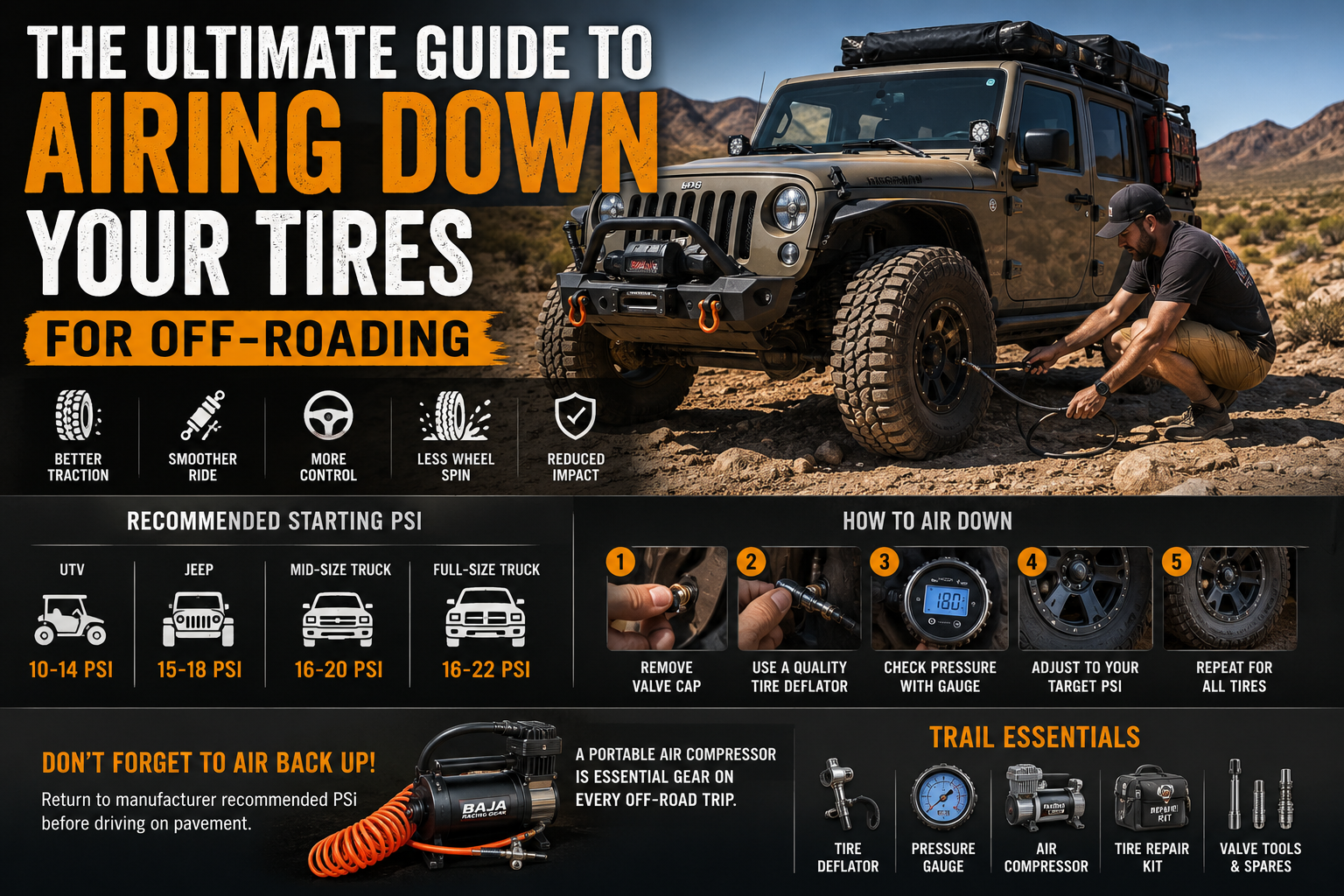
The Ultimate Guide to Airing Down Your Tires for Off-Roading
One of the easiest—and most effective—upgrades you can make before leaving the pavement doesn't involve buying expensive suspension or larger tires. It simply means lowering your tire pressure.
Whether you're driving a Jeep, Toyota, Bronco, UTV, or overland truck, airing down your tires can dramatically improve traction, ride comfort, and vehicle control.
In this guide, we'll explain why airing down works, when you should do it, how low to go, and how to safely air your tires back up before heading home.
Why Air Down?
When you reduce tire pressure, the tire becomes more flexible and creates a larger contact patch with the ground.
That larger footprint means:
- Better traction
- Improved ride quality
- Less wheel spin
- Better performance on rocks, sand, snow, and loose dirt
- Reduced impact on suspension components
Instead of bouncing over obstacles, the tire conforms to the terrain.
Benefits by Terrain
Sand
Lower tire pressure helps your vehicle "float" across soft sand instead of digging in.
Typical pressure:
12–18 PSI
Rocky Trails
Airing down allows the tire to wrap around rocks for significantly better grip while reducing harsh impacts.
Typical pressure:
15–20 PSI
Washboard Roads
Few things improve washboard roads more than lowering tire pressure.
The softer tire absorbs much of the vibration before it reaches the suspension, creating a noticeably smoother ride.
Typical pressure:
18–25 PSI
Snow
Reduced pressure increases flotation and traction on packed snow and soft conditions.
Typical pressure:
10–18 PSI (depending on tire and wheel setup)
How Low Is Too Low?
There isn't one perfect number.
Several factors affect the ideal pressure:
- Tire size
- Wheel diameter
- Vehicle weight
- Terrain
- Speed
A heavily loaded overland vehicle may require more pressure than a lightweight UTV.
As a general starting point:
| Vehicle | Recommended Starting PSI |
|---|---|
| UTV | 10–14 PSI |
| Jeep | 15–18 PSI |
| Mid-size Truck | 16–20 PSI |
| Full-size Truck | 18–22 PSI |
Always adjust based on your vehicle and conditions.
Should You Drive Fast While Aired Down?
No.
Lower tire pressure generates additional heat and increases sidewall flex.
When aired down:
- Reduce highway speeds.
- Avoid aggressive cornering.
- Reinflate before returning to pavement.
Driving long distances on pavement with low tire pressure can damage both the tire and the wheel.
How to Air Down
The process is simple:
- Park on level ground.
- Remove the valve cap.
- Use a quality tire deflator.
- Check pressure with an accurate gauge.
- Repeat for all four tires.
Many off-roaders use automatic deflators that stop at a preset pressure, making the process much faster.
Don't Forget to Air Back Up
Before driving home, always return your tires to the manufacturer's recommended pressure.
A portable air compressor is one of the most valuable tools you can carry on any off-road trip.
Modern compressors can inflate a full set of tires in just a few minutes, making them an essential part of any recovery kit.
Common Mistakes
Avoid these common errors:
- Airing down too far.
- Forgetting to air back up.
- Driving highway speeds on low pressure.
- Ignoring tire temperature.
- Using inaccurate tire gauges.
A few extra minutes spent checking pressure can prevent expensive tire damage.
Frequently Asked Questions
Does airing down damage tires?
No—when done correctly and within the tire's intended operating range.
Is airing down worth it?
Absolutely.
Many experienced off-roaders consider it one of the biggest improvements you can make to both ride quality and traction.
Do I need beadlock wheels?
For most recreational off-roading, no.
Standard wheels work perfectly well at moderate off-road pressures. Beadlocks become beneficial only when running extremely low pressures in demanding terrain.
How long does it take?
With a quality tire deflator, airing down usually takes less than five minutes. Airing back up depends on your compressor but typically takes 10–20 minutes for all four tires.
Final Thoughts
Airing down is one of the simplest techniques that can make the biggest difference on the trail. Better traction, a smoother ride, and increased confidence over rough terrain all come from spending just a few minutes adjusting your tire pressure before your adventure begins.
Whether you're exploring rocky desert trails, cruising sandy washes, or tackling snowy forest roads, proper tire pressure can make the difference between struggling for traction and enjoying the drive.
Trail Essentials
To get the most out of airing down, every off-road kit should include:
- A quality tire deflator
- An accurate tire pressure gauge
- A portable air compressor
- A tire repair kit
- Valve stem tools and spare valve cores
Having these essentials means you'll be prepared to adjust tire pressure confidently wherever your next adventure takes you.

